Canada — Residential Roofing
Ice Dam Prevention & Attic Ventilation Balance
Soffit intake sizing, R-value gaps, and eave ice ridge causes on sloped roofs — examined through the lens of Canadian winters.

Canada — Residential Roofing
Soffit intake sizing, R-value gaps, and eave ice ridge causes on sloped roofs — examined through the lens of Canadian winters.
Articles
Three detailed examinations of the conditions that lead to ice dams on Canadian sloped roofs, and the ventilation principles that counteract them.
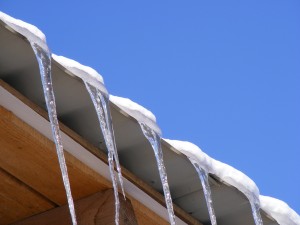
The sequence of heat escape, snow melt, and refreezing at the eave — and why Canadian roof geometry amplifies the risk.
Read article
How the ratio between intake and exhaust area determines whether an attic maintains a stable temperature through a Canadian winter.
Read article
Where insulation commonly falls short near the eave plate, and the role that thermal bridging plays in ice ridge formation.
Read articleAcross most of Canada — from the Great Lakes region through the Prairies and into Atlantic Canada — residential roofs with slopes between 3:12 and 8:12 share a common vulnerability during late-winter cold snaps. Snow sits on the roof surface; interior heat escapes through the attic; the snowpack near the ridge line melts; and the meltwater travels downslope toward the colder eave overhang.
At the eave, where there is no heat from below, the water refreezes. Over successive days, this ice accumulates into a ridge. Water behind the ridge backs up under shingles and can penetrate the roof deck. The damage — staining, rot, insulation saturation — often appears weeks later and is difficult to attribute directly to the ice dam without inspection.
The underlying conditions are well documented in Canadian construction standards. The National Building Code of Canada and provincial supplements address attic ventilation requirements, minimum R-values for ceiling assemblies, and air barrier continuity — all factors that affect ice dam risk.

Key Factors
Ice dam formation depends on an interaction between heat loss, snow load, and roof geometry. Each factor can be addressed independently, but all three typically contribute.
01
When conditioned air escapes into the attic space faster than ventilation can remove it, the roof deck warms unevenly. The ridge-to-eave temperature differential is the primary driver of melt. Ceiling air leakage — at pot lights, plumbing chases, and attic hatches — often contributes more than bulk insulation deficiency.
02
Balanced attic ventilation keeps the roof deck close to outside temperature. The standard target in Canadian practice is a 1:150 net free vent area ratio, with intake positioned at the soffit and exhaust at or near the ridge. Soffit blockage by insulation is a common and often undetected problem.
03
The R-value requirement at the attic floor does not extend automatically to the eave plate. In many older Canadian homes, insulation depth decreases sharply near the exterior wall, precisely where cold bridging is most consequential. This gap concentrates heat transfer at the one location most vulnerable to refreezing.